

Queensland Charter for Local Content
The policy that provides businesses with full, fair and reasonable opportunities to tender for Queensland-Government-funded projects.
Quick links
Key project outcomes
-
Toowoomba Second Range Crossing
- $838M awarded to Qld suppliers
- $400M awarded to regional suppliers
- 807 new suppliers

-
North Queensland Stadium
- $266M awarded to Qld suppliers
- $202M awarded to regional suppliers
- 93 new suppliers

-
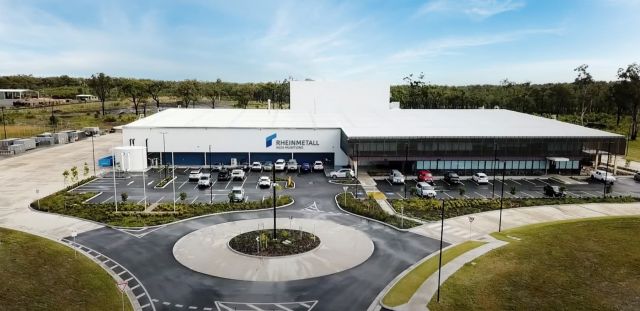
Rheinmetall NIOA Munitions Facility
- $25M awarded to Qld suppliers
- $11M awarded to regional suppliers
- 92 new suppliers
What is the charter?
The Queensland Charter for Local Content is the local industry policy under the Queensland Industry Participation Policy Act 2011. It provides a framework for ensuring best practice in local content procurement undertaken or funded, whether wholly or partially, by the State.
The charter intends to minimise the compliance burden on government agencies and managing contractors. All Queensland government agencies, government-owned corporations and rail government entities, must comply with the charter for all eligible projects.
How to apply the charter
If you’ve been successful in winning a Queensland Government contract or grant and your contract or agreement states that you must comply with the charter, then a statement of intent and project outcome report are required to be completed.
- A statement of intent outlines how you will address the principles of the charter.
- A project outcome report provides data on the value of contracts awarded to local businesses and industries for your project.
-
- Check procurement eligibility
- Complete a procurement notification form (PNF) (
 828.7 KB)
 - Add the Queensland Charter for Local Content clause in tender documents and relevant contracts.
See Section 4 of the Queensland Charter for Local Content - Compliance and Reporting guidelines (
 1.1 MB) provides further information for Agencies, GOCs and Rail Government Entities on how to comply with the Charter for Eligible Projects.
 -
- Complete a statement of intent (SOI) ( 831.0 KB).
- Submit quarterly and a final project outcome report (
 180.4 KB).
See section 5 of the Queensland Charter for Local Content - Compliance and Reporting guidelines (
1.1 MB) provides further information to assist successful tenderers and grant recipients to support the principles of the Charter as Managing Contractor for eligible Projects. - Complete a statement of intent (SOI) (
-
- Complete a tenderers and grant applicants statement of intent (SOI-TG) ( 832.0 KB).
- Submit SOI-TG as part of submission or application.
See Section 6 of the Charter for Local Content - Compliance and reporting guidelines (
1.1 MB) provides further information to assist grant applicants and tenderers understand what information may be required in their application. - Complete a tenderers and grant applicants statement of intent (SOI-TG) (
Eligibility
The charter applies in the following instances:
- Resource and infrastructure procurements with a total Queensland Government contribution of $5 million and above (exclusive of GST) in the South East Queensland region or $2.5 million and above (exclusive of GST) in regional Queensland, excluding information and communications technology (ICT) products and services.
- Public Private Partnerships for projects and capital asset acquisitions with a Queensland Government capital value contribution of $5 million or greater (exclusive of GST).
- Service arrangements (e.g. Standing Offer Arrangements, Invitation to Offer etc) for capital expenditure which is projected to exceed $5 million (exclusive of GST) over the life of the arrangement.
- Queensland Government grants greater than $2.5 million (exclusive of GST).
- Large infrastructure projects where funding of $20 million and above is provided by the Australian Government through payments to the Queensland Government.
The charter aligns with the Queensland Procurement Policy by impacting procurement with its own compliance and reporting requirements.
The charter tracks contract values awarded to local industries, demonstrating the Queensland Government's success in promoting local content. This process enables the government to help build capability and capacity within Queensland industries and encourages local value-adding and innovation. The charter promotes transparency and accountability, supporting local businesses and guiding future policy decisions to benefit the local economy.
The charter provides opportunities to support local businesses and industries and will help develop Queensland’s economy through:
- increased competition and productivity
- increased stability and diversity of markets
- increased employment and skills
- providing market opportunities for local companies
- stimulating innovation in industry
- enhanced public perception and reputation.
-
Local industries should have full, fair and reasonable access to opportunities to participate in the tender process of major procurements undertaken or funded, whether wholly or partially, by the State.
-
As per section 8(a) of the QIPP Act, government agencies are encouraged to apply the principle of achieving value for money in government procurement which considers more than price alone. A value for money consideration assesses cost and non-cost factors as well as the overall aims of government, the procurement, the category and the outcomes being sought. This is consistent with the Queensland Procurement Policy.
-
Government agencies are encouraged to work in partnership with regional communities to develop industry capability and capacity, and secure broader economic and societal benefits, as appropriate.
-
As per section 8(b) of the QIPP Act, government agencies are encouraged to build transparency into their local content policies, processes and criteria to ensure probity and accountability for procurement outcomes.
-
Government agencies are to comply with Australia's international obligations, including those under free trade agreements.
Further information and resources
The Queensland Government aims to optimise local content by maximising participation of capable local businesses and industries and to minimise the compliance burden on project proponents and their contractors. It also recognises that local suppliers need to implement best practice, improve productivity and increase competitiveness.
We provide support to develop industry capability via:
- promotion of business projects, tenders or procurement opportunities
- introducing businesses to local suppliers or other key stakeholders
- providing businesses with regional/industry specific data to help them understand Queensland supply capability and capacity.
We also offer workshops to support for businesses on topics such as:
- supplying into major projects
- capability development
- writing an effective capability statement
- tendering for business
- contract delivery.
To discuss the charter and guidelines please contact qclc@qld.gov.au
-
Policy
- Queensland Charter for Local Content ( 1.4 MB)
Factsheets
- Queensland Charter for Local Content factsheet ( 337.1 KB)
- Factsheet for successful tenderers and grant applications ( 364.9 KB)
Guidelines and toolkits
- Queensland Charter for Local Content Guidelines ( 1.1 MB)
- Clauses and contract conditions examples ( 252.2 KB)
- Goods and services categories guide ( 295.4 KB)
- Project outcome report toolkit ( 2.0 MB)
Templates
- Procurement notification form (PNF) ( 828.7 KB)
- Statement of intent (SOI) ( 831.0 KB)
- Statement of intent for tenderers and grant applicants (SOI-TG) ( 832.0 KB)
- Project outcome report ( 180.4 KB)
- Queensland Charter for Local Content (
Last updated: 28 Jul 2026